Welcome new students! – University Library Service

The network of libraries maintained by Eötvös Loránd University, the University Library Service, with more than 4.3 million documents, wishes you a successful autumn semester.

Enrollment is free for all university citizens, and can also be arranged online through the ELTE Library WebApp application. The collection of libraries is available from the online catalog.

The ELTE University Library and Archives welcomes all students in the heart of the city centre, on Ferenciek Square. You can find information about the services available in each library, the tariffs, opening hours and contact details, as well as the many online services of ELTE libraries on the website of the University Library Service.


Source/author of illustration:
https://www.pexels.com/hu-hu/foto/allatok-feszek-golyak-madarfeszek-158101/

We’ve Launched a New AI-Based Podcast Series

We have launched our new AI-supported podcast series, aimed at presenting our institution, document collection, and services through clear and concise episodes.

The first episode focuses on loaning, answering key questions such as:

  • Who is eligible to loan items?
  • What materials are available for loan—and what are not?
  • How many items can be loaned at once, and for how long?

The discussion also covers the various methods of loaning and returning materials—both online and in person—as well as what to do after the due date has passed, how late fees are applied, and why settling debts on time is essential for uninterrupted access to university services.

Listen to the first episode now on our YouTube channel and in our menu item describing our loan service.

Source/author of illustration:
ELTE EKL

Traditions and Challenges XIII – Once again, our library professional day at the ELTE University Library attracted great interest

On August 28, 2025, the ELTE University Library and Archives hosted the thirteenth annual professional conference entitled Traditions and Challenges. This year's program featured presentations on the topics of Archives and Sustainability and Relocations and Arrangements in the 21st Century.

Our event attracted widespread interest, with nearly 130 guests participating in our programs. Attendees were welcomed by Dr. Annamária Gombos, Director General of the ELTE University Library and Archives, and Dr. Lénárd Darázs, Rector of Eötvös Loránd University.

Following the opening speeches, Dr. Emőke Kötél, project manager at ELTE University Library and Archives, gave a presentation entitled "Warehouse Relocation and DPEKLOSZK," which was followed by a presentation by Ákos Lencsés, PhD, data manager at Pro-M Professzionális Mobil és Hálózati Szolgáltató Zrt. followed by a presentation entitled Data Management – A New Role in Research Support. The morning session concluded with a roundtable discussion entitled The Present and Future of the Domestic "Repository Ecosystem," moderated by Gábor Szeberényi, Director General (PTE University Library and Knowledge Center), and featuring András Holl, PhD (MTA Library and Information Center, Deputy Director General for Information Technology), Gyöngyi Karácsony (DE University and National Library, Director General), Dr. Ernőné Kulcsár Szabó Annamária Gombos (ELTE University Library and Archives, Director General), József Marton (BME National Technical Information Center and Library, Acting Director General), Gyula Nagy, PhD (SZTE Klebelsberg Library and Archives, Director General), and Péter Szluka (SE Central Library, Director).

Moderated by Ákos Lencsés, PhD, data scientist (Pro-M Professional Mobile and Network Service Provider Ltd.), Judit Fazekas-Paragh, acting head of department (DE University and National Library Research Support Department) gave a presentation entitled Behind the scenes: How is HUNOR shaping the future of research support in the era of Open Science? Tibor Móring, research support librarian (ELTE University Library and Archives), outlined the milestones in the development of the ELTE Thesis Repository in his presentation. Gabriella Harangi, software developer, and Emese Molnár-Jakab, digital collection manager (DE University and National Library), gave a presentation on the placement and arrangement of university documents in the repository. Endre Fülöp, PhD, system designer (Qulto), introduced the audience to the theoretical and practical issues of designing a teaching material repository. Enikő Meiszterics, collection management assistant, and Gabriella Virág, data manager, gave a presentation entitled Data Repositories in the Service of Open Science. Mátyás Attila Rényi, department head, and Gábor Klinger, deputy department head (OSZK Collection Preservation Department, Digital Preservation Division), provided insight into trends, metadata, and the challenges of data storage. In the closing presentation, Director Judit Lukácsné Varga (TF Library and Archives) and Managing Director István Sipos (Softlink Hungary Kft.) outlined methods for managing and providing controlled access to theses at the Hungarian University of Physical Education and Sport, based on the Liberty library service platform model.

The section entitled "Relocations and Arrangements in the 21st Century" was moderated by Judit Kóródy, information researcher (Infodok Kft. – Magyar Telekom Infotéka), in which Andrea Mátrai-Nagy, head of department (DE University and National Library Collection Management Department) gave a presentation entitled "...because only Books connect the past to the future...", followed by director Dávid Ritter (ELTE IT Directorate) drawing attention to the challenges and dilemmas of data management at universities. Szilvia Korom, library manager (BGE University Library), gave the audience a behind-the-scenes look at the merger of the faculty libraries of the Budapest University of Economics. Péter Maurer, managing director (M-PaKK Bt.), compiled the most important tips based on nearly forty years of relocation experience. László Balázs, department head (FSZEK IT Department), gave a presentation on the storage of electronic and paper-based documents. The section meeting was concluded with a presentation by Dr. Katalin Németh, Deputy Director of Education (ELTE BTK Institute of Library and Information Science), entitled Free Between Walls: Inclusive Space Design in Libraries.

The conference was organized with the support of the University Library Foundation, the College of University Library Directors, Eisberg Hungary Kft., the Scientific and Special Libraries Section of the Hungarian Librarians' Association, Könyvtárellátó Nonprofit Kft., ProQuest, Qulto, and Softlink.  Abstracts of the presentations are available on our website. The ELTE University Library and Archives plans to publish a collection of studies on the 13th Professional Day of Traditions and Challenges, which will also be available in electronic form in the ELTE EDIT repository.

Source/author of illustration:
ELTE ULA

Congratulations to our honorees!

According to the traditions of Eötvös Loránd University, the Senate of the University presented the awards to the lecturers, employees and staff who provided excellent work and outstanding performance at the opening Senate meeting of the academic year. This year's honorees included several staff members of the University Library Service, who are committed to the cause of the university and library development.

The University management awarded the Senate Medal of Merit to László Garamvölgyi, Deputy Director General of the ELTE University Library and Archives. Eszter Marianna Bodonyi, Head of the Public Services Department and reference librarian, as well as Viktória Völgyi, Librarian and Head of the Spanish Language and Literature Department Library at ELTE's Faculty of Humanities, were awarded the Trefort Ágoston Memorial Certificate for their above-average performance over a long period of time. The staff of the ELTE University Library and Archives, bibliographer Csaba Mező and stack attendant Máté Percze, received a Rector's Commendation.

Congratulations to our colleagues on the occasion of their award, we wish them every success in their further work!

Source/author of illustration:
ELTE

Pelikan Blue (animated film by László Csáki, 2024)

The ELTE–NFI University Film Club continues the series of screenings and discussions. We welcome university citizens from all faculties of ELTE.

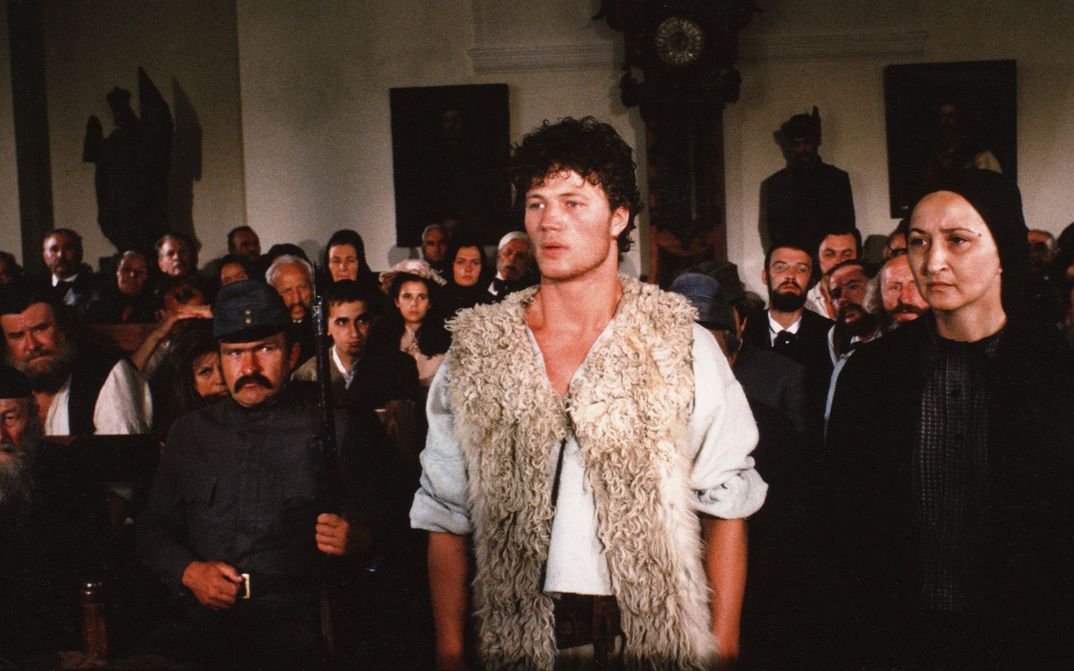
Since its premiere, Pelikan Blue has won twelve awards and accolades both at home and abroad. It invites viewers on a truly nostalgic journey, evoking real events with plenty of humor and contemporary music. Today, it is natural for us to travel and cross national borders several times a year, but this was not always the case. In 1988, everyone in Hungary could apply for a passport, the borders were opened, and travel became possible, but train and bus travel was very expensive. What is freedom worth if you cannot enjoy it? Three good friends, Ákos, Laci and Petya, who long to visit Europe, get the phone number of a guy who sells fake train tickets. Thus begins their adventure, during which they discover that the tickets are filled out by hand with indigo ink (Kék Pelikan), and the copy is given to the passenger, while the „original” copy, written with a ballpoint pen, remains with MÁV (Hungarian State Railways). In an apartment in a tenement building in downtown Budapest, chemical experiments with the tickets begin...

Preview: https://www.youtube.com/watch?v=oPUKKYJaM_o&t=57s

Date: 17 September 2025, 18:00

Venue: University Square campus (1053 Budapest, Egyetem tér 1-3. fszt., corridor next to the cloakroom)

"This film, which masterfully combines animation and documentary techniques, revealed Hungary to us not only in a personal context, but also in a broader social and historical context. The experience was dynamic and contemporary. Distinctive and captivating characters guided us through the story, not only enchanting us but also making us their accomplices in the search for freedom. All this, wrapped in a vibrant world of sound and visuals, made the film experience entertaining and unforgettable," read the jury's statement at the Stuttgart festival, which awarded the production the prize for best feature film.

Our guests in the post-screening discussion are director László Csáki and Zsuzsanna Ács, who painted the film, appeared in the scenes and edited the making-of film.

Ács Zsuzsanna
             Zsuzsanna Ács
László Csáki
                     László Csáki


Due to limited seating, please register in advance here:

https://www.ajk.elte.hu/content/kek-pelikan-csaki-laszlo-animacios-filmje-2024.e.1913

Correspondence about the film club is welcome via eltenfi.filmklub@elte.hu.

The ELTE–NFI Filmklub on Facebook 

Source/author of illustration:
National Film Institute

Subscribed Academic Databases at ELTE

Eötvös Loránd University is committed to supporting scientific research and education by providing access to a wide range of subscribed databases for its faculty members and students:

  • University-level access within the framework of the Electronic Information Service (EISZ) National Programme.
  • Faculty-level subscriptions, available locally on the respective faculty’s network.

The up-to-date list of subscribed databases is available on the website of the University Library and Archives.


ELTEFind – the Integrated Search Platform of ELTE

ELTEFind is the literature search service of the University Library and Archives, enabling simultaneous search across the following resources:


Access Options

  • Online resources are automatically available within the university’s IP range.
  • Remote access is possible via the university VPN service.


Further Information and Support

If you have any questions regarding the databases, please feel free to contact us at eisz@lib.elte.hu

Source/author of illustration:
ELTE ULA, The illustration was created using ChatGPT.

The return of our priceless cultural heritage

On July 23, 2025, Foreign Minister Péter Szijjártó announced that the New York District Attorney's Office had returned a priceless publication written in 1675 to Hungary, which had previously been stolen from Budapest.

The publication in question is Nervus Opticus sive Tractatus theoricus by Jesuit monk Zacharias Traber (1611–1679), which appeared at an auction at an antique bookshop in New York in March 2022. A handwritten note on the title page indicates that it once belonged to the library of the Jesuit college in Nagyszombat, the predecessor of the University Library. The volume, published in Vienna in 1675, is divided into three books: optics (the science of light), catoptrics (the science of reflected light, i.e., reflection), and dioptrics (the science of refraction). The title page of this richly illustrated publication was created by copperplate engraver Tobias Sadeler (c. 1641–1679), and it was probably his workshop that produced the plates containing the illustrations. In addition to the fundamentals of optics, Traber also analyzes the practical tasks involved in producing various catoptric combinations based on his personal design experience. The chapters describing the archbishop's garden in Bratislava are an important historical source. The volume was published with two different dedications: one part contained a dedication to Karl von Liechtenstein-Kastelkorn, Bishop of Olomouc (1664-1695), while the other part contained a dedication praising György Szelepcsényi, Archbishop of Esztergom. Only three copies dedicated to Archbishop Szelepcsényi are preserved today in Hungarian public collections.

As the legal successor to the library of the Jesuit college in Nagyszombat, the ELTE University Library and Archives launched an extensive investigation to determine whether the volume that appeared in New York was identical to the copy missing from our collection. With the help of the antiquarian bookshop that announced the auction, it was proven that the elements proving that the volume once belonged to a public collection had clearly been removed: a small stamp was found on the title page, and the flyleaf and endpaper (where other ownership stamps would have been) had been replaced. Multispectral imaging revealed that the volume had once borne the ownership stamp of the former Collegium of Baron József Eötvös. After lengthy research, it was finally possible to reconstruct the volume's adventurous journey. According to the University Library's manuscript catalogues, it still had seven copies of the volume in 1690. In 1777, when the library moved from Nagyszombat to Buda, it only had two copies left. During the move, approximately three thousand volumes that were no longer necessary for university education were left behind in Nagyszombat, and most of these were distributed among various church institutions and individuals. This is how one copy of the volume ended up at the Catholic High School in Pozsony, and from there to the library of the Eötvös József Collegium. It disappeared from the Collegium in the 1940s, and now, some eight decades later, thanks to the cooperation of the ELTE University Library and Archives, it can be returned to its rightful owner.

Details of the lengthy and exciting investigation can be found in Dr. Kulcsár Szabó Ernőné Gombos Annamária's article entitled Everything you wanted to know about the protection of public collections but were afraid to ask.

Source/author of illustration:
https://www.flickr.com/photos/internetarchivebookimages/14570125590/

Reporting Day K21 – Results in the light of quality improvement

At the second quarterly report of the K21 Quality Coordination Committee 2025, the leaders of the working groups reported on the results of the past quarter, ongoing work and changes.

The K21 Quality Coordination Committee unanimously adopted the report on the survey on the use of electronic content. The Library Council approved the Quality Improvement Report of the University Library Service (ULS). The report was forwarded to the ELTE Quality Improvement Committee. The evaluation of the results of the ELTE Staff and the Student Needs and Satisfaction Survey has been begun by the Primer Research Working Group.

The Communication Working Group provided information on the tasks and achievements of the working groups through the website, the newsletter and the short film 3 months – 3 minutes on the mailing list, as well as contributed to the success of the preparation and administration of the K21 reporting days meetings. The group has provided additional news on the ELTE Libraries platform, including online credit card payments, as well as exhibitions and events on the occasion of the International Day of Special Needs Education, which were also published in our newsletter. The Green Library Questionnaire has been sent out and the results are expected to be published in the autumn.

During the quarter, Aleph–SAP data transfer and the SimplePay payment options were launched, simplifying the accounting of library income and the settlement of fees for services. The Library Leaders Working Group held three meetings to discuss, among others, IT challenges affecting library services, the introduction of a new chat channel, the report of the Office of Academic Policy on ELTE's publication performance in 2024, the summer shutdown of the Integrated Library System and the challenges of the ELTE ULA Savaria Library and Archives conversion.

An update on the achievements of the K21 Quality Coordination Committee and our new developments will be posted on our website soon.

Source/author of illustration:
ELTE ULA

System Downtime for Maintenance

We would like to inform our readers that, in line with the summer closure of the ELTE libraries, the ELTE library system will be shut down for maintenance from July 28 to approximately August 24, 2025.
During this period, reader services and the following online functions will not be available:

  • Logging into the ELTEfind catalog (search functionality will remain accessible),
  • Renewing loans and settling fines via the ELTE Library WebApp,
  • Processing online registration requests (these will only be reviewed once the system is back online).

Please note that during the maintenance period, library staff will also not have access to the system, so it will not be possible to renew loans or handle reader-related matters via phone or email.

Source/author of illustration:
AI, EKL

Academics at ELTE – Zoltan Bay

The Hungarian Academy of Sciences will celebrate its 200th anniversary in 2025. Among its members are many distinguished students and teachers who have left their mark not only on the Academy but also on the history of our institution. Zoltan Bay (1900–1992) physicist, university professor was a member of the Hungarian Academy of Sciences from 1945.

Zoltan Bay completed his secondary school studies at the Reformed College of Debrecen, and then at the Faculty of Mathematics and Physics of our University. Under the influence of his role model, Loránd Eötvös, he decided to pursue research in the natural sciences. During his university years, he was a member of the Eötvös Collegium, and later became an assistant professor in the Department of Theoretical Physics at the university. In 1926 he obtained a doctorate in physics with the highest distinction, sub auspiciis gubernatoris. After years at the University of Berlin and the University of Szeged, he habilitated at the University of Budapest in 1936. He continued his research work in the laboratory of the United Incandescent Company and at the Technical University of Budapest. During this period, he was awarded patents for several inventions, such as the development of high-voltage gas pipes and radio receiver circuits. He was the first person in the world to apply the principle of secondary electron multiplication to atomic counting, and today it forms the basis of all the techniques used in fast atomic counting. During the Second World War, he organised a resistance movement and undertook the construction of a secret radio transmitter. In December 1946, he was awarded the Silver Medal of the Order of Freedom, together with Albert Szent-Györgyi, for his wartime activities. In the summer of 1945, he and his research team began the first experiments in Europe to detect radar echoes from the Moon. The distance measurements that could be made with this method have greatly improved our knowledge of distances in the solar system. Forced to emigrate in 1948, he became a professor of experimental physics in the United States of America, working with Albert Szent-Györgyi and János Neumann. From 1955 he worked at the National Bureau of Standards, primarily working for the introduction of a length unit standard based on the speed of light. Measurement played an extremely important role in his work. He has played a decisive role in the development of modern measuring techniques, including the development of extremely accurate time and length measurement procedures. His results have contributed significantly to the development of space technology and the Global Positioning System (GPS). Part of his legacy is preserved in our archives.

Source/author of illustration:
ELTE University Library and Archives