If you are curious about the secrets hidden in the history of the ELTE University Library and the treasures kept within its walls, explore the library palace with the help of an audio guide. The doors of the country's first state-owned publiclibrary will open up to you as you have never seen them before.
Our audio guide tour is now available in Spanish in addition to Hungarian, English and Chinese. Further information regarding the service is provided on our website.
The Sándor Kőrösi Csoma Dormitory at ELTE is home to one of Imre Varga’s most outstanding works of art. The statue of Zeus was erected in the college courtyard in 1972 and has remained there ever since. Interestingly, the statue does not face the college itself, but rather Budaörsi Road.
The work currently stands next to Building B of the college; however, this building was constructed after the statue was erected. In 1972, the college had only Building A, and the soil conditions in its immediate vicinity were not suitable for placing the statue there. For years, the sculpture was hidden by the surrounding vegetation, but it is now accessible to everyone. To make it easier for residents to approach the work, a path leading to it was also constructed. Parts of this path have survived to this day, so anyone who wishes to walk around the sculpture can still do so using it.
According to the original plans, the dormitory grounds were not intended to feature a work of this scale; instead, a design for a relief sculpture made of slab stone had been proposed to adorn the retaining wall of the front garden. The idea for the seven-meter-tall portrait of Zeus originated from Imre Varga’s vision, as the artist believed it better represented the spirit of the dormitory. The university originally approached the Cultural Investment Company in 1967 to commission a work for the dormitory grounds; by the time the project was assigned to Imre Varga, the artist had already begun designing a larger sculpture. As a result, the work was completed: a seven-meter-tall portrait of Zeus carved from limestone, which can also be interpreted as a “head standing on legs.” Its unique technique and use of materials make it one-of-a-kind; Imre Varga did not carve the limestone block from the outside, but instead collected stones found in nature, which he used to assemble the portrait with the help of concrete.
Sculptor Imre Varga (1923–2019) was one of Hungary’s most significant artists; his prominent role is well illustrated by the fact that his works have been exhibited in numerous countries, and his life’s work has received significant national and international recognition. His work was honored with the Kossuth and Herder Prizes, among others, and he was awarded the
Commander’s Cross of the Order of Arts and Letters in France and the Knight’s Cross of the Order of Merit of the Italian Republic in Italy.
Photo and written by Szemenyei Dalma, student of ELTE
Clarivate invites all interested participants to their thematically structured webinar series designed specifically for PhD students. The final session focuses on researcher profiles and developing a long-term strategy. The thematically structured program consists interrelated sessions, but the webinar can also be attended independently.
Details of the final event:
5. PhD Program: Building a Researcher Profile & Long-Term Strategy
Date & time: 23 June, (Tuesday), 11:00 AM -12:00 PM CEST
By the end of this session, PhD candidates will be able to:
Explain the role of researcher profiles in scholarly visibility and attribution
Create or optimize a researcher profile aligned with their academic identity
Monitor research impact using citation and collaboration indicators
Analyze research trends to inform medium- and long-term research strategy
Develop a personal plan for maintaining research visibility and integrity over time
Participation is subject to registration. Recordings of the webinars will be sent to all registered participants.
The program provides practical knowledge that participants can use during their doctoral studies to directly support their own research and publication activities. Throughout the webinars participants were able to acquire knowledge in areas such as literature search strategies, analysis of publication trends, journal selection, and publication visibility. Read details about the previous training events:
Clarivate invites all interested participants to their thematically structured webinar series designed specifically for PhD students. The fourth session focuses on publishing, evaluating the relevance of journals and the importance of metrics and publication ethics. The thematically structured program provides practical knowledge that participants can use during their doctoral studies to directly support their own research and publication activities.
Details of the fourth event:
4. PhD Program: Choosing Where to Publish – Journals, Metrics and Integrity
Date & time: 25 May, (Monday), 11:00 AM–12:00 PM CEST
By the end of this session, PhD candidates will be able to:
Interpret key journal-level indicators responsibly and in context
Recognize predatory publishing practices
Identify and compare credible journals based on their profiles and citation indicators
Evaluate the relevance of potential publication venues for their research
Apply principles of responsible metrics and publication ethics in journal selection
Participation is subject to registration. Recordings of the webinars will be sent to all registered participants.
The program consists five interrelated sessions, but individual webinars can also be attended independently. Read details about the previous training events:
Do you have a tried-and-true holiday dish that everyone always raves about? A quick weeknight favorite that’s a must for family dinners? Or a special cake you learned to make from your grandmother?
Now is your chance to pass on these treasured recipes!
We’re collecting our visitors’ favorite dishes—whether it’s a festive feast, a home-style classic, or a truly special dessert.
Send us your favorite recipe via the form created specifically for this purpose on the library’s website, and feel free to include a photo!
The recipe collection will remain accessible on our website, so you can try making others’ favorites too.
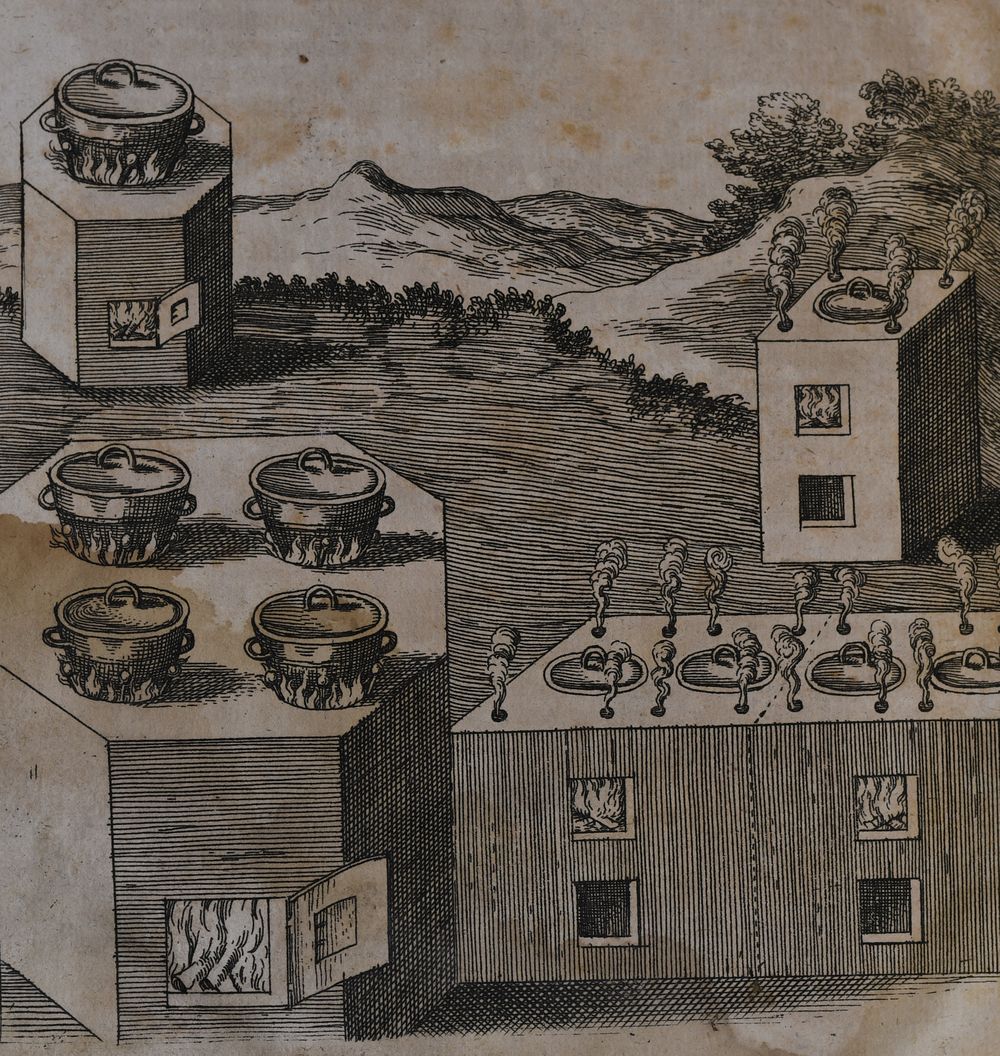
ELTE ULA, Bar. 04589 Maria Sophia Schellhammer: Die wol unterwiesene Köchinn, das ist Unterricht, wie man alle Speisen, so nur in Teutschland bekant seyn mögen, aufs füglichste zubereiten ... solle ... Braunschweig: In Verlegung Caspar Grubers sehl. nachgel. Wittwe und Erben, 1697.
Source/author of illustration:
ELTE ULA, ELTE EKL, Ant. 1422 Christian Egenolff: Von Speisen, natürlichen und kreuter Wein, aller verstandt : uber den zusatz viler bewerter Künst, in sonders fleissig gebessert und corrigirt, auss Apitio, Platina, Varrone, Bapt. Fiera etc. FaM 1531.
Trial access period: from 30 April to 12 June, 2026
SAGE Research Methods is a methods library with more than 1000 books, reference works, journal articles, and instructional videos by world-leading academics from across the social sciences, including the largest collection of qualitative methods books available online from any scholarly publisher. The site is designed to guide users to the content they need, whether they want to learn the basics or master a specific method.
Clarivate invites all interested participants to their hungarian webinar, which explores why rigorous data curation, stable classifications, and rich metadata are essential for meaningful research intelligence.
Details of the webinar:
Date & Time: 27 May (Wednesday), 2026, 10:00-11:00 AM CEST
During the session they will examine concrete examples of how weak or incomplete data structures can distort citation analysis, benchmarking, collaboration indicators, and performance assessments, and how structured approaches such as subject normalization and time-aware metrics help mitigate these risks.
Participants will gain a deeper understanding of how high-quality research data supports reliable search and discovery, enables fair and responsible analytics, and strengthens evidence-based decisions for institutions, funders, and policy makers. The session will also discuss practical implications for research evaluation frameworks, strategic planning, and the responsible use of metrics in a rapidly evolving scholarly ecosystem.
The film's motto: "In memory of the Scythians, Huns, Avars, and the other peoples of the steppe."
This animated film, based on the most famous Hungarian folk tale, Fehérlófia (Son of the White Mare), and its variants found from the Far East to Austria, explores the theme of the eternal cycle. According to the legend, Fehérlófia (Son of the White Mare) – also known as Fanyűvő (Treeshaker) – is a boy born of a white mare, endowed with superhuman strength. The story is about the boy’s coming of age and initiation: he sets out on a journey to conquer the three-, seven-, and twelve-headed dragons that took over the world after the White Mare’s death, and to rescue three princesses – Autumn, Spring, and Summer Beauty – who have been captured by the dragons. Along the way, he befriends two other mighty men, Kőmorzsoló (Stonecrumbler) and Vasgyúró (Ironrubber), who both join him, and outwits the cunning old man who tempts the boys, Hétszűnyű Kapanyányi Monyók (Sevenwinged Skullsized Gnome).
In 1984, it was selected in Los Angeles as one of the 50 greatest animated films of all time.
Date: 13 May 2026; 6:00 p.m.
Venue: University Square Campus, Weiss Emilia Hall (1053 Budapest, Egyetem tér 1–3., ground floor, in the hallway next to the coat check)
Director: Marcell Jankovics
Screenplay: Marcell Jankovics, László György
Production Design: Marcell Jankovics, Zsolt Richly, László Hegedűs
Cinematography: Zoltán Bacsó
Editing: Magda Hap
Music: István Vajda
Voice actors: György Cserhalmi, Vera Pap, Gyula Szabó
Our guest for the post-screening discussion: Anna Ida Orosz, film historian and archivist, animation specialist at the National Film Archive
The Hungarian Association of Higher Education Archives (MFLSZ) held its traditional annual conference from April 28 to 30, 2026, hosted by the ELTE ULA Savaria Library and Archives.
At the opening of the annual conference, welcoming remarks were delivered by MFLSZ President Zsolt Osváth; Nóra Lenkai, Rector’s Commissioner, representing the ELTE Savaria University Center; Dr. László Szende, Head of Department, representing the Ministry of Culture and Innovation; and Dr. Kulcsár Szabó Ernőné Gombos Annamária, Director General of the ELTE University Library and Archives.
Following the opening ceremony, a roundtable discussion was held on current issues in archival work, after which the professional program focused this year on cooperation among university public collections. Among the conference speakers, Dr. Rita Balla, museologist, and Dr. Krisztina Tóth, archivist, representing the ELTE University Library and Archives, gave a presentation titled The Museum Collection of the ELTE University Library and Archives within the University Public Collection System, during which the achieved results, best practices, and the joint coin catalog – a major milestone – were unveiled. The closing session focused on cooperation between university organisations and university public collections.
In addition to the conference, the program included the MFLSZ annual general meeting as well as exciting collection visits; attendees had the opportunity to visit the ELTE ULA Savaria Library and Archives, the Vas County Archives of the Hungarian National Archives, and the Szombathely Diocesan Library and Archives.