Mosaics from the heritage of ELTE – January 2026

The object of the month – Zacharias Traber: Nervus opticus sive Tractatus theoricus. Vienna, 1675.

The founding of the historical library of the Baron József Eötvös Collegium (1896–1950) is linked to the name of Baron Dénes Mednyánszky, who enriched the institution, established in 1895, with his father's valuable library in 1896. By the end of World War II, the library had grown to contain tens of thousands of items, until 1950, when the elite college was converted into a student dormitory. and the library collection was transferred to the Hungarian Academy of Sciences Library, which was established in the building. In 1956, this became the Eötvös Library of the Institute of Literary Studies (now known as the Eötvös Library of the ELTE HTK Institute of Literary Studies).

Based on the original inventory logs, Zacharias Traber: His volume entitled Nervus opticus sive Tractatus theoricus, published in Vienna in 1675, was added to the collection in 1903, but then disappeared from the former library of Eötvös Collegium during the turmoil of World War II, only to reappear decades later on the American art market. The particular value of Nervus Opticus lies in the fact that, in addition to summarizing the theoretical foundations of optics, Traber supplemented his work with a wealth of engravings. The plates containing illustrative figures are not merely illustrations, but didactic tools that aid in the interpretation of the text. The volume is also an irreplaceable source for reconstructing the former appearance of the archbishop's garden in Pozsony: Traber played a decisive role in the design of the garden on behalf of Archbishop György Lippay.


Kép a könyvről


The volume appeared in the online catalog of a New York antiquarian bookshop in the spring of 2022. Literary historian Gábor Kiss Farkas noticed the copy, primarily because of the owner's note in the description, which referred to the Jesuit college in Nagyszombat. This information led him to the staff of the ELTE University Library and Archives, as at the end of the 18th century, a significant part of the Jesuit library in Nagyszombat was incorporated into the library collection of the university, which had been moved to Buda.

Following this observation, the ELTE University Library and Archives launched an internal investigation and contacted the antiquarian bookshop. The title page of the volume bore a barely visible, blurred stamp mark, which was identified using modern imaging techniques and multispectral analysis. The technology revealed an unexpected result: the stamp did not belong to the University Library, but to the former library of the Baron Eötvös József Collegium.


Kép a kinyitott könyvről


The restitution process began in 2022 and was completed in 2025 as a result of cooperation between several institutions, contributing to the preservation of a piece of the collection heritage linked to ELTE. The historical library of the Eötvös Collegium is preserved and maintained by the Eötvös Library of the Institute for Literary Research, so the work has been returned to exactly where it disappeared from some eighty years earlier.

Written by Attila Boda.

Source: Markó Veronika: A visszatért Nervus opticus. ELTE HTK Irodalomtudományi Kutatóintézet, Ismerettár blog / https://www.abtk.hu/ismerettar/blog/a-visszatert-nervus-opticus [Viewing date: 2026.01.18.]

Source/author of illustration:
ELTE HTK Irodalomtudományi Kutatóintézet Eötvös Könyvtára

The popularity of our library books in 2025

We have collected the most frequently loaned books in the University Library over the past year.

Scientific and scholarly works

  • Immanuel Kant: A tiszta ész kritikája
  • Szijártó M. István: A történelem diskurzusa
  • Platón: Állam
  • Theodor W. Adorno – Max Horkheimer: A felvilágosodás dialektikája
  • Arisztotelész: Nikomakhoszi etika
  • A nyelv és a nyelvek (szerk. Kenesei István)
  • Walter Benjamin: Angelus novus
  • Az olvasás kultúrtörténete a nyugati világban (szerk. Guglielmo Cavallo, Roger Chartier)
  • Michel Foucault: Felügyelet és büntetés
  • Vétkek és választások – a felelősség elméletei (szerk. Réz Anna)
  • Carlo Ginzburg: A sajt és a kukacok
  • Alasdair C. MacIntyre: Az erény nyomában
  • J. Gurevics: A középkori ember világképe
  • Erika Fischer-Lichte: A performativitás esztétikája
  • Pierre Bourdieu: A társadalmi egyenlőtlenségek újratermelődése
  • Gaston Bachelard: A tér poétikája
  • René Descartes: Elmélkedések az első filozófiáról
  • Jacques Derrida: Grammatológia
  • Boldizsár Ildikó: Meseterápia
  • Friedrich Schiller: Művészet- és történelemfilozófiai írások

Textbooks

  • Aswath Damodaran: A befektetés értékeléséről
  • Ferenczi Attila – Monostori Martina: Latin nyelvkönyv
  • Stephen A. Ross – Randolph W. Westerfield – Bradford D. Jordan: A vállalati pénzügyek alapjai (Fundamentals of Corporate Finance)
  • N. Gregory Mankiw: A közgazdaságtan alapjai
  • Magyar irodalom (főszerk. Gintli Tibor)
  • Eliot R. Smith – Diane M. Mackie – Heather M. Claypool: Szociálpszichológia (Social Psychology)
  • A magyar nyelvtörténet kézikönyve (szerk. Kiss Jenő és Pusztai Ferenc)
  • Romsics Ignác: Magyarország története a XX. században
  • Paul R. Krugman – Maurice Obstfeld: Nemzetközi gazdaságtan
  • Európa ezer éve: a középkor I-II. (szerk. Klaniczay Gábor)
  • Németh György – Hegyi W. György: Görög-római történelem
  • Magyar grammatika (szerk. Keszler Borbála)
  • Magyarország története a 19. században (szerk. Gergely András)
  • Kora újkori egyetemes történeti szöveggyűjtemény (szerk. Poór János)
  • Pedagógusok pszichológiai kézikönyve I-III. (szerk. N. Kollár Katalin, Szabó Éva)
  • A kora újkor története (szerk. Poór János)
  • Jeffrey M. Wooldridge: Introductory Econometrics – a modern approach
  • Aswath Damodaran: Investment Valuation

Literature

  • Krasznahorkai László: Sátántangó
  • Italo Calvino: Ha egy téli éjszakán egy utazó
  • Virginia Woolf: Mrs. Dalloway
  • Proust: Swannék oldala (Az eltűnt idő nyomában)          
  • Fjodor Mihajlovics Dosztojevszkij: Bűn és bűnhődés
  • Gustave Flaubert: Bovaryné
  • William Shakespeare: Hamlet
  • Ottlik Géza: Iskola a határon
  • George Orwell: 1984
  • Franz Kafka: Az átváltozás
  • Kaffka Margit: Hangyaboly
  • Dante Alighieri: Isteni színjáték
  • Bodor Ádám: Sinistra körzet
  • Gabriel García Márquez: Száz év magány
  • Aurelius Augustinus: Vallomások
  • Fjodor Mihajlovics Dosztojevszkij: A félkegyelmű
  • Kosztolányi Dezső: Édes Anna
  • Kosztolányi Dezső: Esti Kornél
  • Kemény Lili: Nem
Source/author of illustration:
ELTE ULA

Discover the treasury of knowledge! – Interactive building tours now also available in Chinese

If you are curious about the secrets hidden in the history of the ELTE University Library and the treasures kept within its walls, explore the library palace with the help of an audio guide. The doors of the country's first state-owned public library will open up to you as you have never seen them before.

Our audio guide tour is now available in Chinese in addition to Hungarian and English. Further information regarding the service is provided on our website.

All visitors are welcome!


Source/author of illustration:
ELTE ULA

The Library Palace is 150 years old – The library's new calendar is now available

The 2026 calendar of the ELTE University Library and Archives features a selection of images of the Library Palace.

On 26 March 1876, in the presence of Ágoston Trefort, Minister of Religion and Public Education, and Károly Than, University Rector, the new building of Hungary’s first state-maintained university library was ceremonially opened. Construction of the building, the first in the country to be built specifically for library purposes, began in the spring of 1873, based on the plans of architect Antal Szkalniczky (1836–1878), following the conclusion of decades of litigation over the site. The main requirement for the design was to ensure that the building’s exterior and interior decoration reflected the purpose of the institution, to accommodate the ever-growing collection of books, and to enable the university’s lecturers, students and interested members of the public in the capital to „make the most practical and thorough use of the scientific treasures accumulated within it.” Created by the most renowned and talented artists and craftsmen of the era, the building has suffered major damage twice during its 150-year existence: during World War II, the glass roof covering the Baroque Reading Room with its gallery was destroyed, and then in 1973, the building almost split in two due to the construction of the subway, with restoration only taking place in the mid-1990s. The library palace was declared a protected monument in 1991 and was awarded the Hungarian Heritage Prize in 2018. Celebrating the 150th anniversary of the opening, the building still serves its original purpose today, as it is a popular destination for university students wishing to research or study. Nearly a hundred thousand visitors are drawn to the library each year to use the collection of two million volumes. An electronic version of the calendar is available here.

The representative wall calendar was published under the management of the Prime Minister’s Office, with the support of the National Cooperation Fund, the Bethlen Gábor Fund Management Ltd. and the Foundation for the University Library.

For information about the support options of the Foundation for the University Library, please, visit our website. Further details about our book adoption program are available here.


NEA_ME_BGA
Source/author of illustration:
ELTE ULA

Christmas closure

Our library will be closed between 22 December 2025 and 4 January 2026. Our library's services will be available from 5 January 2026.

We wish all our dear readers a very merry, blessed Christmas and a successful new year!

Source/author of illustration:
ELTE ULA, Illustration based on Ludwig Richter's copperplate engraving (Leipzig: Alphons Türr, 1854) (Georg Rietschel: Weihnachten in Kirche, Kunst und Volksleben. Bielefeld; Leipzig: Velhagen u. Klasing, 1902. Gd 4r 942/5)

Pro Bibliotheca Universitatis – Honorees for the year 2025

At Christmas 2025, the ELTE University Library and Archives awarded Tibor Móring, research librarian at the Education and Research Support Department, in recognition of his high-quality professional work and his contribution to enhancing the prestige of our institution. This year, for the first time, the Pro Bibliotheca Universitatis Junior award was also presented to Ádám Bollók, IT specialist in the IT and Development Department, in recognition of his successful work and outstanding performance.

Tibor Móring has been a committed and reliable member of the Education and Research Support Department since its establishment in 2019. He plays a prominent role in the high-level coordination of tasks related to the ELTE institutional repository, as well as in the planning and collection management of the ELTE Thesis Repository, which ensures the long-term archiving and lawful service of university theses, TDK (Scientific Students’ Associations) and OTDK (National Conference of Scientific Students' Associations) theses. Since 2022, he has also provided significant professional support in the preparatory processes for the ELTE teaching material repository service. He was one of the first to participate in the HUNOR (Hungarian Open Repositories) working group's train-the-trainers programme so that he could be prepared to assist university lecturers and researchers in preparing research data management plans. He completed the data management specialist training course announced by ELTE Faculty of Humanities in 2025 with excellent results. He regularly and willingly shares his knowledge and professional experience. He is a guest speaker at several professional conferences and roundtable discussions, and a recognized and active member of the library professional community involved in research support. His work is characterized by exceptional professional competence, reliability, and exemplary cooperation. His activities contribute significantly to ensuring that the University Library and Archives, as well as the University Library Service, can continuously represent the highest professional standards in the field of domestic research support.


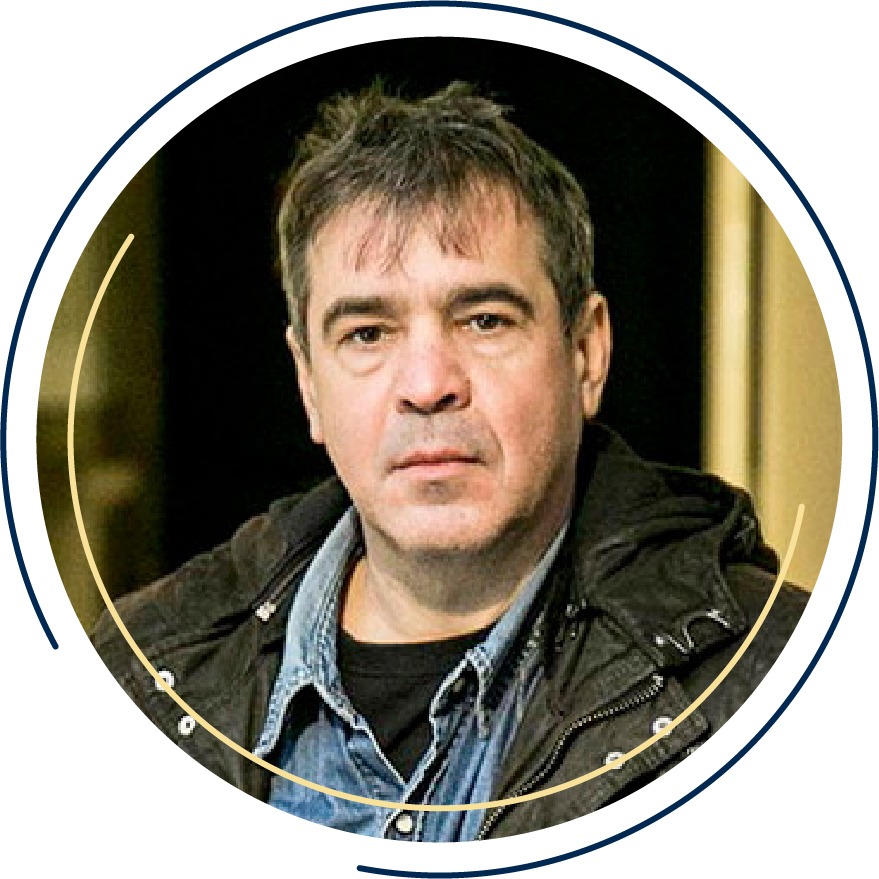
Tibor Móring


Ádám Bollók joined our institution just a year and a half ago as a certified computer programmer. His professional aptitude, work ethic and exemplary attitude were proven during the technical development of the library's new multilingual audio guide service. He completed the task with exceptional independence and thoroughness. He is also actively and effectively involved in the preparations for the repository update. His proactive approach and desire to learn are outstanding. His personality and attitude serve as a guide for his colleagues. He is extremely helpful, cooperative and willing to support his colleagues in any situation. His personal and professional humility, reliability and openness are values that enrich our community and set an example for us all to follow.


Ádám Bollók


The staff of the ELTE University Library and Archives wish him every success and joy in his future work!

The list of our honored colleagues is available here.

Source/author of illustration:
ELTE ULA

Reporting Day K21 – Results in the light of quality improvement

At the fourth quarterly report of the K21 Quality Coordination Committee 2025, the leaders of the working groups reported on the results of the past quarter, ongoing work and changes.

The K21 Quality Management Coordination Committee unanimously approved the reports prepared by the Primer working group on student needs and satisfaction surveys, as well as the library results of the ELTE staff survey and the 2026 work plan. All working groups prepared their fourth quarter reports and work plans for the coming year.

The Process Management Working Group has begun inviting process owners to prepare key process descriptions. The Communication Working Group provided information on the tasks and achievements of the working groups through the website, the newsletter and the short film 3 months – 3 minutes on the mailing list, as well as contributed to the success of the preparation and administration of the K21 reporting days meetings. The group has provided additional news on the ELTE Libraries platform, which were also published in our newsletter. An article entitled Kozmutza Flóra – the faces of a special needs teacher has been posted on the website and included in the University Heritage News section. The data from the Green Library questionnaire has been compiled by the Green Library working group, and a summary is expected to be available early next year.

The Library Managers Working Group held two meetings, during which they discussed, among others, the 2024 staff and 2025 student needs and satisfaction surveys relating to libraries, the 2026 work plans, the rector's directive regulating the use of artificial intelligence in education, as well as information about future IT changes and upcoming projects.

An update on the achievements of the K21 Quality Coordination Committee and our new developments will be posted on our website soon.

Source/author of illustration:
ELTE ULA

Commemoration of Ferenc Toldy

The ELTE University Library and Archives also paid tribute to Ferenc Toldy on the 220th anniversary of his birth and the 150th anniversary of his death at a commemoration organised by the National Heritage Institute on 10 December 2025.

Dr. Kulcsár Szabó Ernőné Gombos Annamária, Director General, representing our institution, bowed her head at Ferenc Toldy's tomb in the Fiumei Road Cemetery, thus paying tribute to the former director of the ELTE University Library. Ferenc Toldy played a leading role in the intellectual life of Hungary during the Reform Era, laying the foundations for the creation of a scholarly Hungarian literary history, a research library consisting of encyclopedias and dictionaries, and a periodical reading room. During his tenure as director, between 1843 and 1874, during the library's most turbulent period, he had to fight continuously for ownership of the library site, while political changes and scientific developments meant that the university, which was undergoing renewal, required a new type of library to accommodate the growing number of students and their changing needs. As a result of these struggles, the library palace on Ferenciek Square was built.

Gábor Móczár, Director General of the National Heritage Institute, gave a welcome speech at the event, and Prof. Dr. Gábor Kecskeméti, Director of the Institute of Literary Studies at the HUN-REN Humanities Research Center, also gave a speech. Photos of the event are available on the Facebook page of the National Heritage Institute. For more information about the work of Ferenc Toldy, please visit our website.

Toldy Ferenc-megemlékezés


Source/author of illustration:
ELTE ULA